
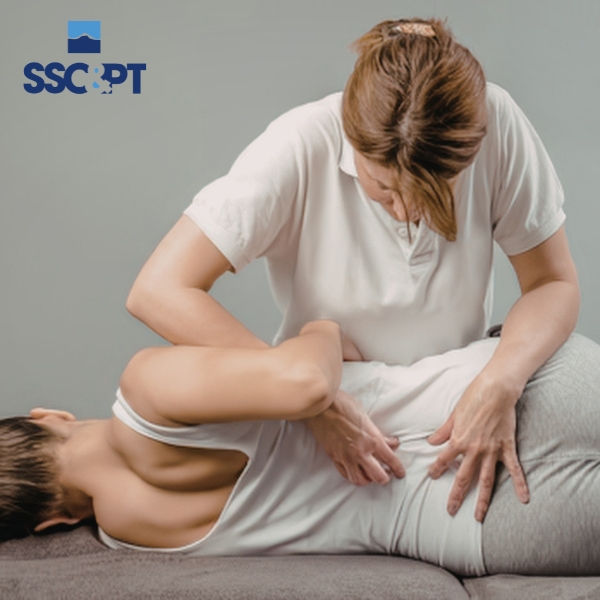
It’s one of the most common questions chiropractors hear, usually right after the first adjustment: “What was that sound?”
That pop or crack can be surprising, especially if you weren’t expecting it. The good news is that it’s a normal, well-understood part of how joints work. Here’s what causes the sound, what it does and doesn’t mean, and why you don’t need to worry.
What Causes the Popping Sound?
The joints in your spine, like the joints in your knuckles, are surrounded by a capsule filled with synovial fluid. This fluid lubricates the joint and contains dissolved gases, including oxygen, nitrogen, and carbon dioxide.
During an adjustment, your chiropractor moves a joint quickly and precisely, which briefly separates the joint surfaces. That separation lowers the pressure inside the joint capsule, and a gas-filled cavity forms in the fluid. Releasing that pressure creates the popping sound. This process is called cavitation.
It’s the same thing that happens when you crack your knuckles. In fact, researchers have used real-time MRI to watch knuckle cracking happen and saw a cavity form in the joint fluid at the moment of the pop.
The sound is not bones grinding, bones “going back into place,” or anything breaking. It’s simply a change in pressure inside the joint.
Why you can’t pop the same joint again right away
Once a joint cavitates, it usually can’t pop again for a while, often 20 minutes or more. The gas needs time to dissolve back into the fluid before the same sound can happen again. That’s why your chiropractor won’t keep adjusting one spot to get a sound.
Does the Pop Mean the Adjustment Worked?
Not necessarily. Many patients assume a loud pop means a successful adjustment, but the sound itself isn’t the goal. The goal is to improve how the joint moves and to reduce pain and tension. An adjustment can do that with or without an audible pop.
There are several reasons an adjustment might be quiet:
- The joint recently cavitated. If it popped earlier, there may not be enough gas built up yet.
- Muscle tension. Tight, guarded muscles can limit how much the joint separates.
- The technique used. Some chiropractic techniques, such as instrument-assisted adjustments, gentle mobilization, or drop-table methods, are designed to move joints with little or no popping.
- Individual differences. Some people’s joints pop more easily than others.
If you’re nervous about the sound, tell your chiropractor. Gentler, low-force options may be available.
Is the Popping Sound Harmful?
No. Cavitation is a normal joint event, and the sound itself doesn’t damage the joint.
You may have heard that cracking your knuckles causes arthritis. Research hasn’t found evidence to support that. In one well-known case, a physician cracked the knuckles of only one hand for about 60 years and found no difference in arthritis between his two hands. Larger studies comparing habitual knuckle crackers with non-crackers have also not found a link to arthritis.
Is it normal to feel sore after an adjustment?
Some people feel mild soreness or stiffness for a day or two after an adjustment, especially after their first few visits. It’s similar to how your muscles might feel after a new workout. Drinking water, staying gently active, and using ice or heat as your chiropractor recommends can help. If soreness is severe or doesn’t improve, let your chiropractor know.
Should You Crack Your Own Neck or Back?
An occasional pop when you stretch or twist is normal and usually nothing to worry about. Repeatedly forcing your own neck or back to crack is a different story.
When you crack your own spine, you can’t control which joint moves. Often the joints that pop are the ones that already move easily, while the stiff joints causing your discomfort stay stuck. The quick relief may fade, leading you to crack again and again. Forceful twisting of the neck in particular can strain muscles and other tissues.
If you feel the constant urge to crack your neck or back, it’s often a sign that something isn’t moving well. A chiropractor or physical therapist can identify stiff joints, treat them directly, and give you exercises to keep them moving.
Experience Chiropractic Care at South Shore Chiro & PT
At South Shore Chiro & PT, every adjustment starts with an evaluation and a conversation, not a crack. Our chiropractors explain what they’re doing and why, check in on your comfort, and tailor techniques to your needs, including gentler options if you prefer less popping. When it helps your recovery, our physical therapy team can work alongside your chiropractic care.
Curious about chiropractic care but unsure what to expect? Learn more about our chiropractic care or request an appointment. We accept most major insurance plans, and same-day and next-day appointments are often available.





No comment